2020
Open Call. Technological Habits: Bodies and Movements
Open call for works on the effects of technology on bodies. The selected works will be part of the next festival in 2020.

The projects were selected by a jury formed by Diana Szeinblum (AR), Cristóbal Cea (CL), and Gala Berger (AR-CR). 34 works in different disciplines were selected: audiovisual, photography, sound art, video performance, and dance/performance.
Selected
Artists
Abril Carissimo (AR)
Adina Lizeth García Velázquez (MX)
Ana de Ilzarbe (AR)
Angie Rengifo (CO)
Celia Argüello Rena, Pablo Lugones (AR)
Constanza Castagnet (AR)
Daira Cañete (AR)
Delfina Dotti, Alina Marinelli, Gala González, Margarita Molfino (AR)
El Pelele (AR)
Florencia Vallejos (AR)
Francisca Armando (AR)
Gustavo Bianchi, Miguel Garutti, Heidi Giel, Camila Pozner, Martín Flugelman (AR)
Ignacio Barocchi (AR)
Iván Haidar (AR)
Julia Lucesole, Vanessa Salamanca, Amelia Orden (AR)
Julia Sbriller (AR)
Julián Brangold (AR)
Julieta Tarraubella (AR)
Lígia Villarón, Natália Beserra, Murilo Augusto (Grupo Teia) (BR)
Mabel (AR)
Marcos Goymil (AR)
María Molina Peiró (ES)
Matías Romero (AR)
Máximo Signiorini (AR)
Mercedes Invernizzi Oviedo (CU/AR)
Milagros Loyola (AR)
Natalia García Clark (MX)
Nicole Neidert (SE)
Nina Kovensky (AR)
Patricia Teles (BR)
Paula Soares (BR)
Santiago Carlini (AR)
Sofia Fiondella, Lucila Berenblum (AR)
Victoria Maréchal (CH)
Concept
The relationship between the human and the artificial contracts and extends in constant modification and simulation. That is why Technological Habits: Bodies and Movements explores how technology and the digital archive generate habits and effects on contemporary bodies, movements, and sensibilities.
Jury
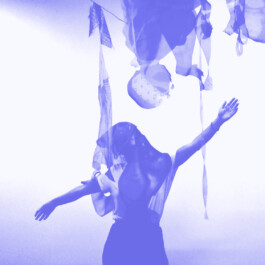
Gala Berger (AR-CR)
Gala Berger is an independent visual artist + curator who lives and thinks between San José, Costa Rica, and Buenos Aires, Argentina. In 2019 she was a member of RAW Académy #6 in Dakar, Senegal. She is co-founder of Museo La Ene (2010-2020), an experimental museum based in Buenos Aires, and of the spaces for Inmigrante (2012) and Urgente (2014). Her works have been exhibited individually and collectively in: Dominican Republic, Guatemala, Costa Rica, Argentina, Sweden, Peru, Mexico, Canada, Brazil, Colombia, South Korea, Germany, Chile, Ecuador, United States, Puerto Rico, United Arab Emirates, among others. She is currently working on the independent feminist project Casa Ma in Costa Rica, dedicated to creating cultural value around the work of women artists from Central America, the Caribbean, and their diasporas.
www.galaberger.com

Diana Szeinblum (AR)
Dancer and choreographer. She completed her studies at the Folkwang Tanz Schule (Germany) where she later joined the company FTS with the artistic direction of Pina Bausch. As a choreographer, she has performed works such as Secreto y Malibu (2000), Alaska (2007), Una cosa por vez (2013), Adentro! (2016). She was invited by the Teatro Colón Experimentation Centers (CETC) and the Teatro Argentino de La Plata (TACEC), Teatro La Rivera (CTBA). She staged works for the San Martín Theater Company (Bs.As. 2003), Luna Negra Dance Company (Chicago, 2011), Grupo Tumakat (Mexico, 2012), Compañía Nacional (2014). She made performative works for national and international biennials, museums, and institutions, among which stand out: Art Basel Cities, Museum of Modern Art, Museum of Contemporary Art of Chicago, among others. She has published essays in El tiempo es lo único que tenemos (Caja Negra), Dance texts (2 (DA) en papel).
dianaszeinblum.com
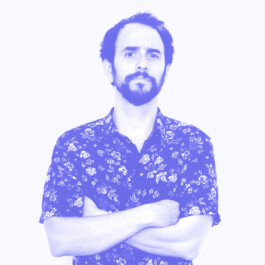
Cristobal Cea (CL)
Artist and also a teacher. He has taught what he does (and what he doesn't) in Animation, Media Arts, and Videogame courses at universities in Chile and the US. He has also exhibited his work in different instances, his favorites being a solo show at the Museum of Visual Arts (Chile), screenings at Microscope Gallery (NY), a show with friends at Nemesio Gallery (Chile), and other festivals and very beautiful things in France, Sweden, USA, Holland, Belgium, and China but never in England or Germany. As a result of what he has done, he supposes that he has received some recognitions such as the Young Art Award (he received it at 36!), the Fulbright scholarship, and other incentives that have made it easier for him to believe in contemporary art, and continue producing